Why this matters to you: A low response rate typically has underlying issues that can go unnoticed. Some of the most common ones are weak subject lines, lack of personalisation, disconnected follow-ups, and reaching out to the wrong creators. These can lead to missed opportunities that could have been yours in the first place.
The good news? These are very fixable. Addressing them can not only improve your response rates but also make your brand feel more credible, relevant, and worth responding to.
Use this checklist when reviewing a campaign to confirm it's set up to get the best possible response from influencers. Work through each bucket in order before the campaign goes live.
SARAL users typically see reply rates between 30–40%. Aim for an 80–90% open rate and at least a 30% reply rate — if you're falling short, that's a sign something in one of the buckets below needs work.
Send from a real-looking inbox on your brand's domain
Emails that look like they're from an actual person ("Chris from [Brand]") get opened way more often than ones from a generic brand name or a no-reply address. It's a small change, but it's an easy win, and it also helps with deliverability.
Example: [email protected] or [email protected]
Your subject line is the first thing an influencer sees, so make it count. Always include {{username}} or {{first_name}}.Personalized subject lines improve open rates and deliverability, while repetitive, non-personalized ones are more likely to be flagged as bulk mail. Try adding a question mark; questions spark curiosity and tend to get more opens.
A few proven examples:
{{first_name}}, excited to explore a collaboration with you and [BRAND]!
Collaboration opportunity! [BRAND] x {{username}}
Let's partner up! [BRAND] x {{username}}
{{first_name}}, let's team up? Collaboration opportunity with [BRAND]!
{{first_name}}, want to be a [BRAND] partner?

Give the influencer an easy way to learn more about your brand. It builds trust and shows you're a legitimate, professional operation.
Embed links in text instead of pasting raw URLs. It keeps the email clean and professional while still getting people where you want them to go.
State why you're reaching out, then move quickly into the key points — no long windups. Stick to 3–4 short paragraphs at most; no one wants to read a long email. Make the offer clear from the start: what they're getting, what you're asking for, and why the collaboration makes sense for them.
Wherever possible, go beyond using just their first name. Mention their content, niche, or something specific that stood out about them to make the email feel less automated.
{{personal_line}} in the body to customize each email and make sure Personal Lines are generated in the List section where the influencers are enrolled first.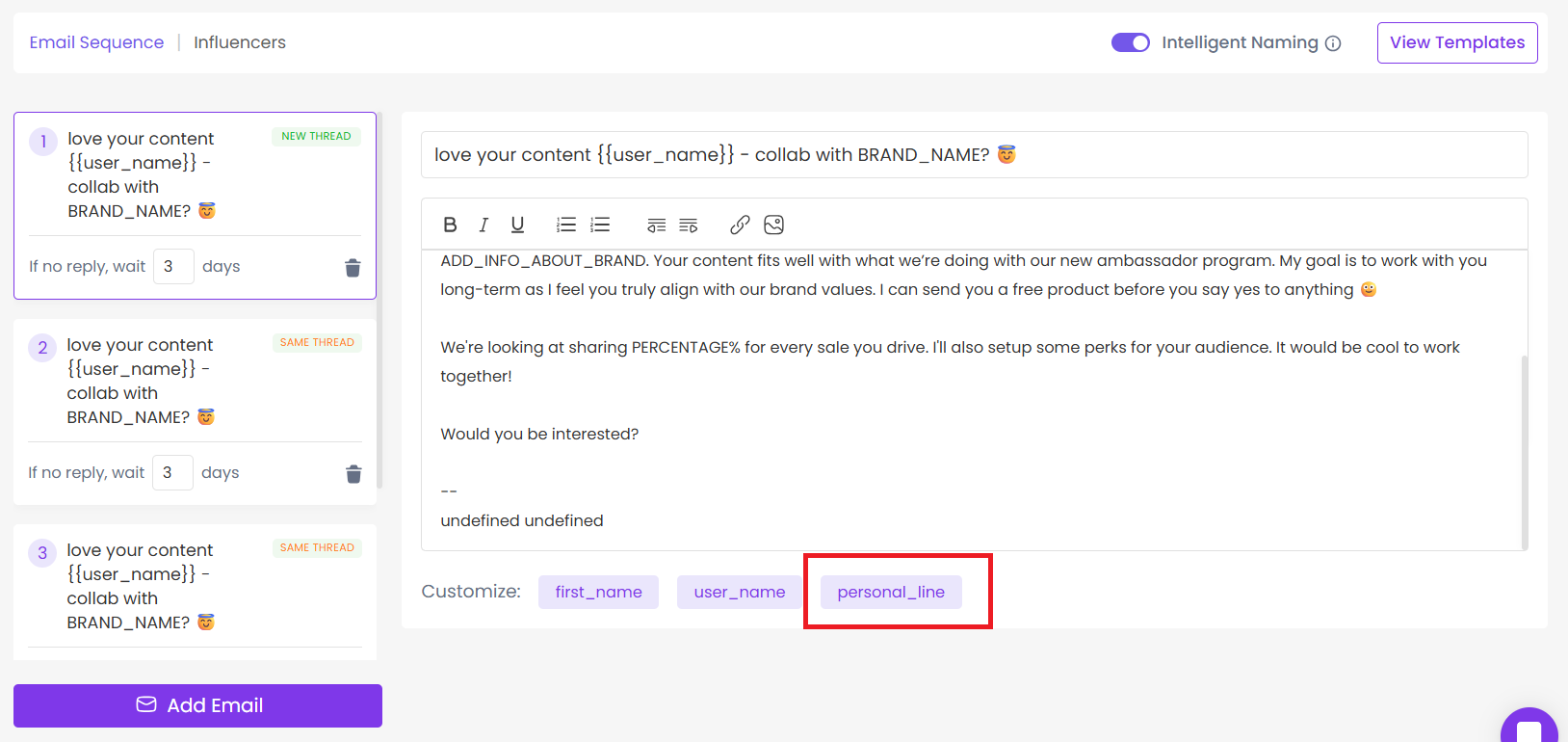
People skim. Use short paragraphs, bullet points, and headers so the important stuff stands out then bold what you're offering and what you need from them so it's easy to spot at a glance.
Example: We'd love to send you a free product kit to try, and in exchange we'd just need a 60-second video from you.
Tailor the format to your audience — Gen Z influencers, for example, tend to respond better to short, direct emails than long, detail-heavy ones.
Close with a clear, open-ended question so the influencer has an obvious next step and it's easy for them to reply. Don't jump straight to "sign up here" or "fill out this form." If the goal is to get them to sign up, keep that step dead simple. Something like "Here's a quick link with more details about the program" works better than a multi-step ask.
Your first email and your follow-ups should share the same subject line so everything stays in one thread. This makes it easier for the influencer to follow the conversation. After the third follow-up, start a new thread and send two more emails, three days apart (five emails total).
Since a new thread won't have the original context, re-include the key details from your first email so they're not stuck digging through old messages.
In your second or third follow-up, mention that only 20–30 influencers are selected per month. This creates pressure to respond and tends to boost reply rates.
Don't just repeat the first email. Give the influencer a reason to reconsider. Experiment with:
What makes you different — unique selling points, quality, ethics, celebrity backing, whatever sets you apart
A stronger incentive — if they didn't bite the first time, sweeten the offer ("Want to try our product for free?")
A different tone — if your first email was formal, try a more casual, friendly follow-up
Even a great email won't perform if the influencers you're reaching aren't a genuine fit for the brand, product, or offer.
Influencers in different niches, age groups, or audience sizes respond to different messaging. Don't send one blanket email to everyone.
Mention brands or influencers you've already worked with. It builds trust fast, especially if you're a newer or smaller brand — something like "we've partnered with X and Y" reassures them you're legit.
Combine targeting and segmentation with the personalization tactics from Bucket 2. The more the outreach reflects who the creator actually is, the higher the reply rate.
Still Have Questions?
Reach out anytime via the support chat at the bottom-right corner of your dashboard, or email us at [email protected]. We're happy to assist!